Why are we Here?

The Education industry’s problem

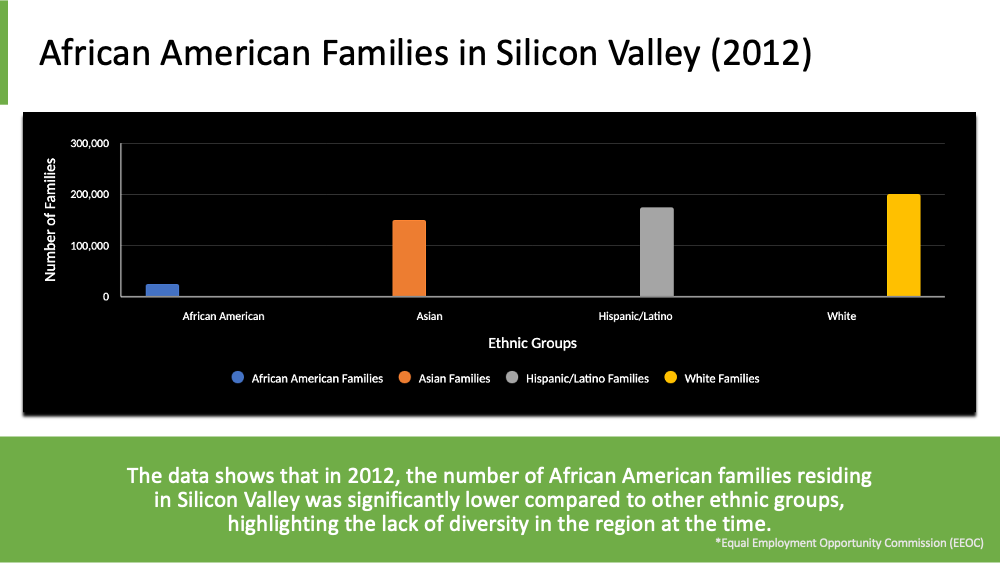
This slide shows that in 2012, African American families represented a significantly smaller portion of Silicon Valley’s population compared to other groups. When families are underrepresented in a region, it often means:

  • Fewer students in local STEM programs
  • Less exposure to tech careers
  • Fewer networks connected to high-growth industries
  • Reduced generational access to wealth-building opportunities

If students are not geographically and socially positioned near opportunity, they are less likely to access it. This creates a structural pipeline gap long before hiring decisions are ever made.

The tech industry’s Problem

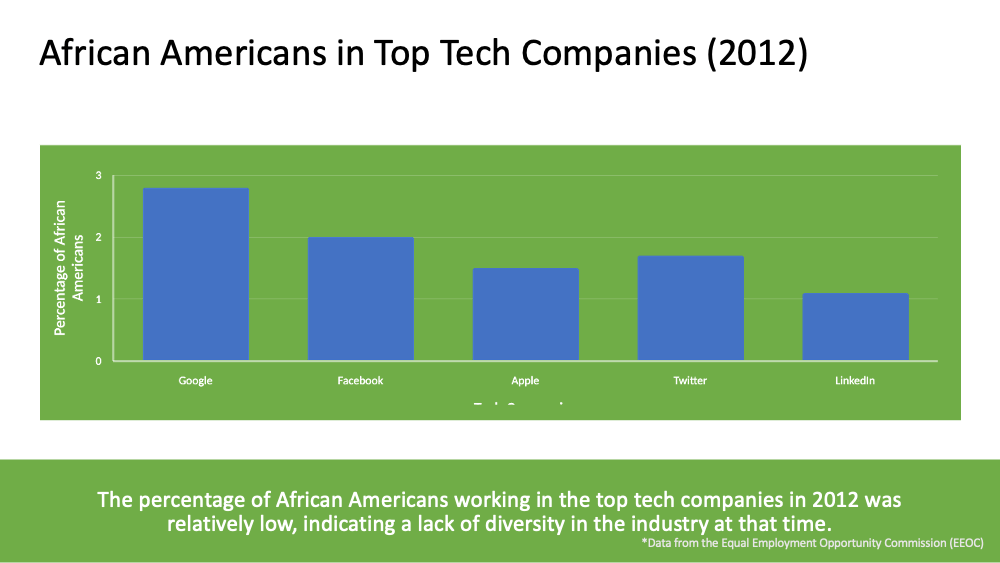
This second slide shows that African Americans made up only about 1–3% of employees at top tech companies in 2012. That is not just a hiring issue — it reflects:

  • Limited STEM preparation pipelines
  • Lack of mentorship and sponsorship
  • Insufficient exposure to tech careers
  • Barriers to entry into high-growth sectors

Low representation in industry reinforces low aspiration in education. When students don’t see people who look like them in tech, belief and belonging suffer.

Why TSEP’s Existence Is Critical

TSEP directly intervenes at the intersection of these two challenges:

✅ Pipeline Development

TSEP introduces students to STEM early, builds academic confidence, and increases college readiness — particularly in science, technology, engineering, and math.

✅ Exposure & Access

Through partnerships with tech companies and universities, TSEP provides real-world exposure, networking, and hands-on learning that students might not otherwise access.

✅ Identity & Belonging

By affirming students’ potential and connecting them with mentors and role models, TSEP addresses the psychological barrier of “I don’t belong here.”

✅ College & Career Readiness

TSEP helps students understand how to apply to college, seek financial aid, develop personal brands, and build professional networks — all critical steps toward entering competitive industries.